From a published paper to
957,772 people.
This is what we built for Dr. Tomoyasu Horikawa.
Neuroscientist. NTT Communication Science Laboratories, Japan. Published in Science Advances.
The Research
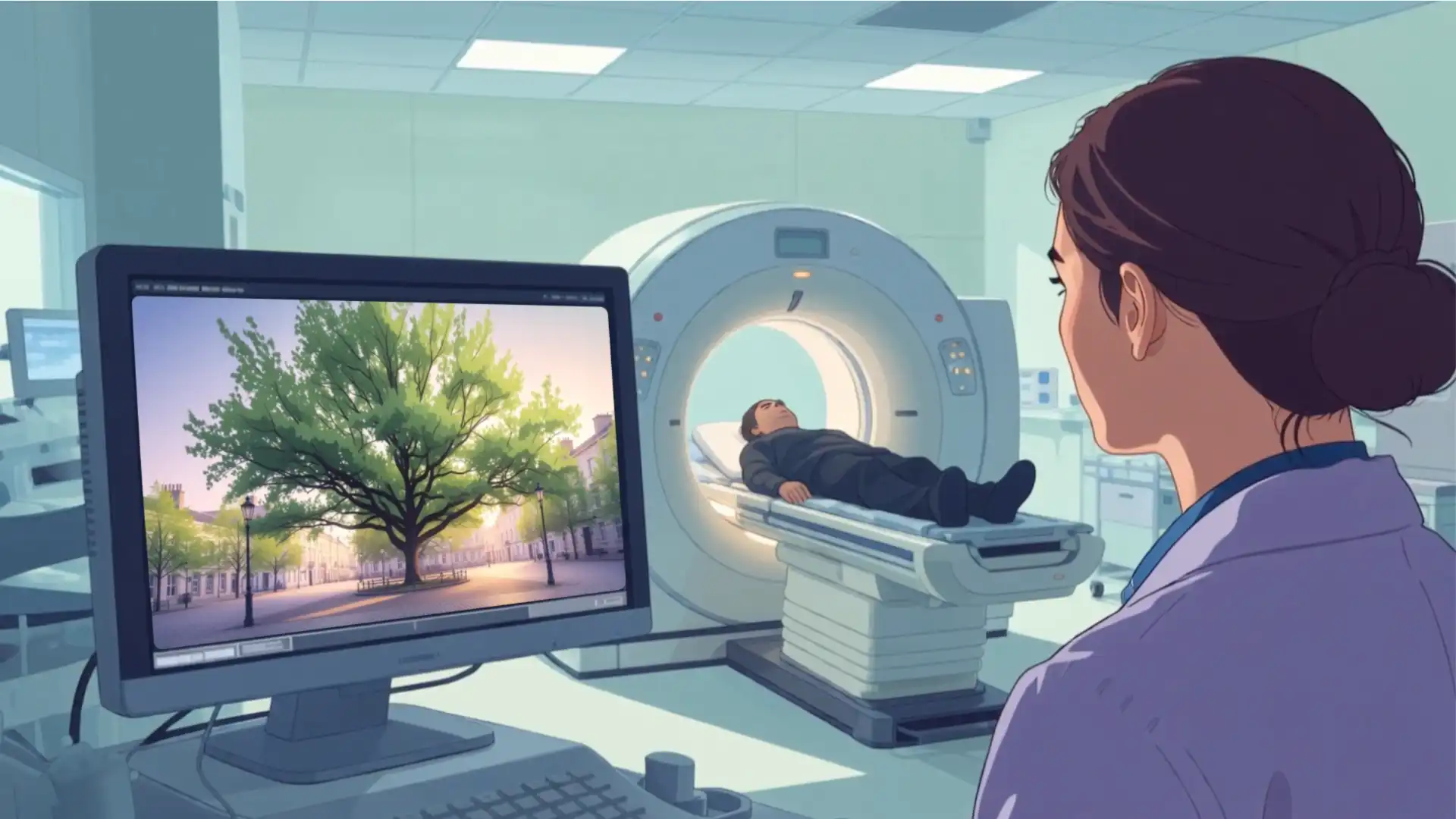
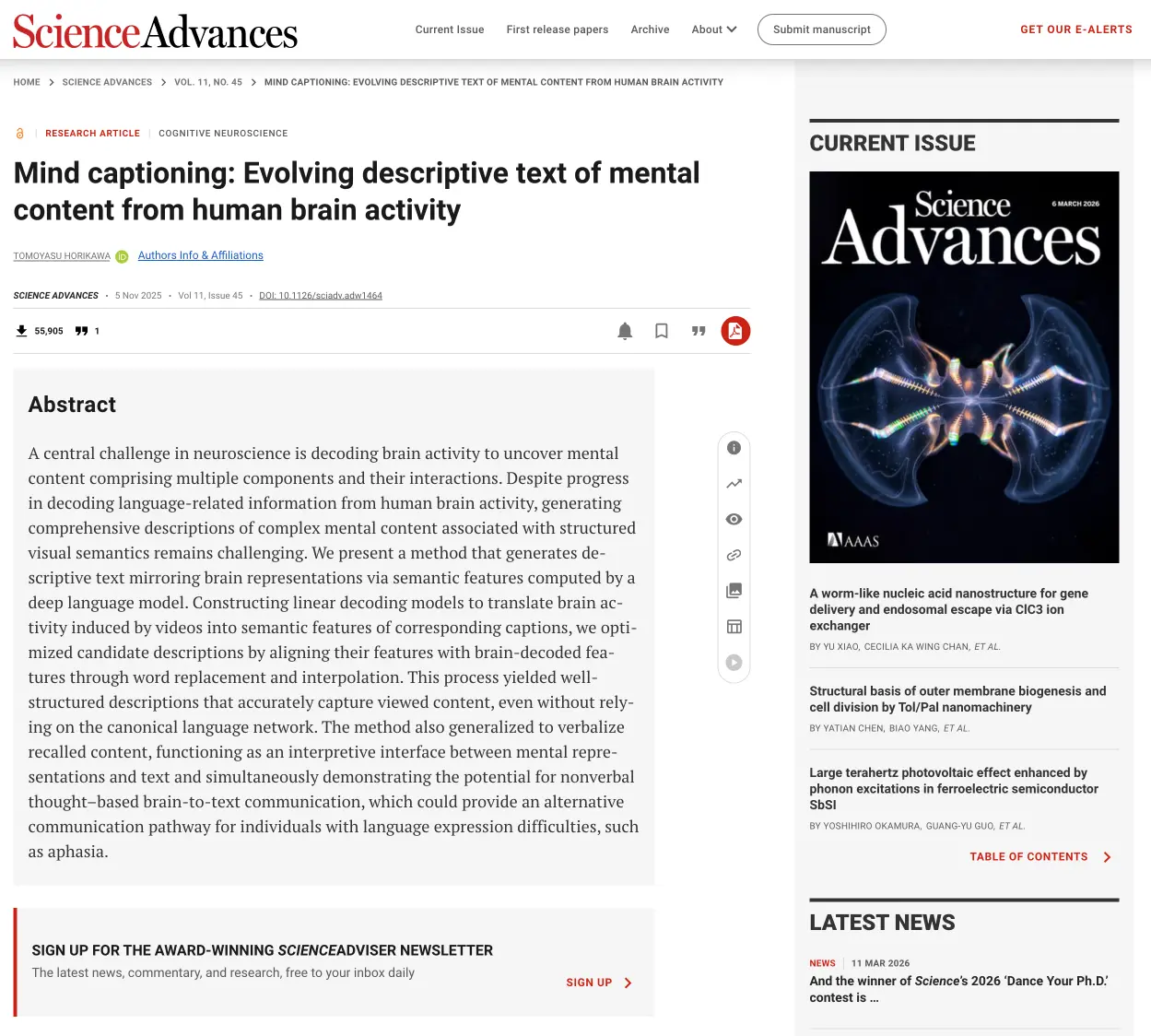
Dr Horikawa's paper on Mind Captioning was published in Science Advances in 2025. It describes a method for decoding the semantic content of visual experiences directly from brain activity, translating what a person sees or imagines into text descriptions using fMRI and AI.
It is genuinely important work. It is also, in its published form, almost impossible for anyone outside cognitive neuroscience to engage with.
That is not a criticism. It is a structural problem every researcher faces. The journal is the right format for peer review. It is the wrong format for everyone else.
What We Built
The Film
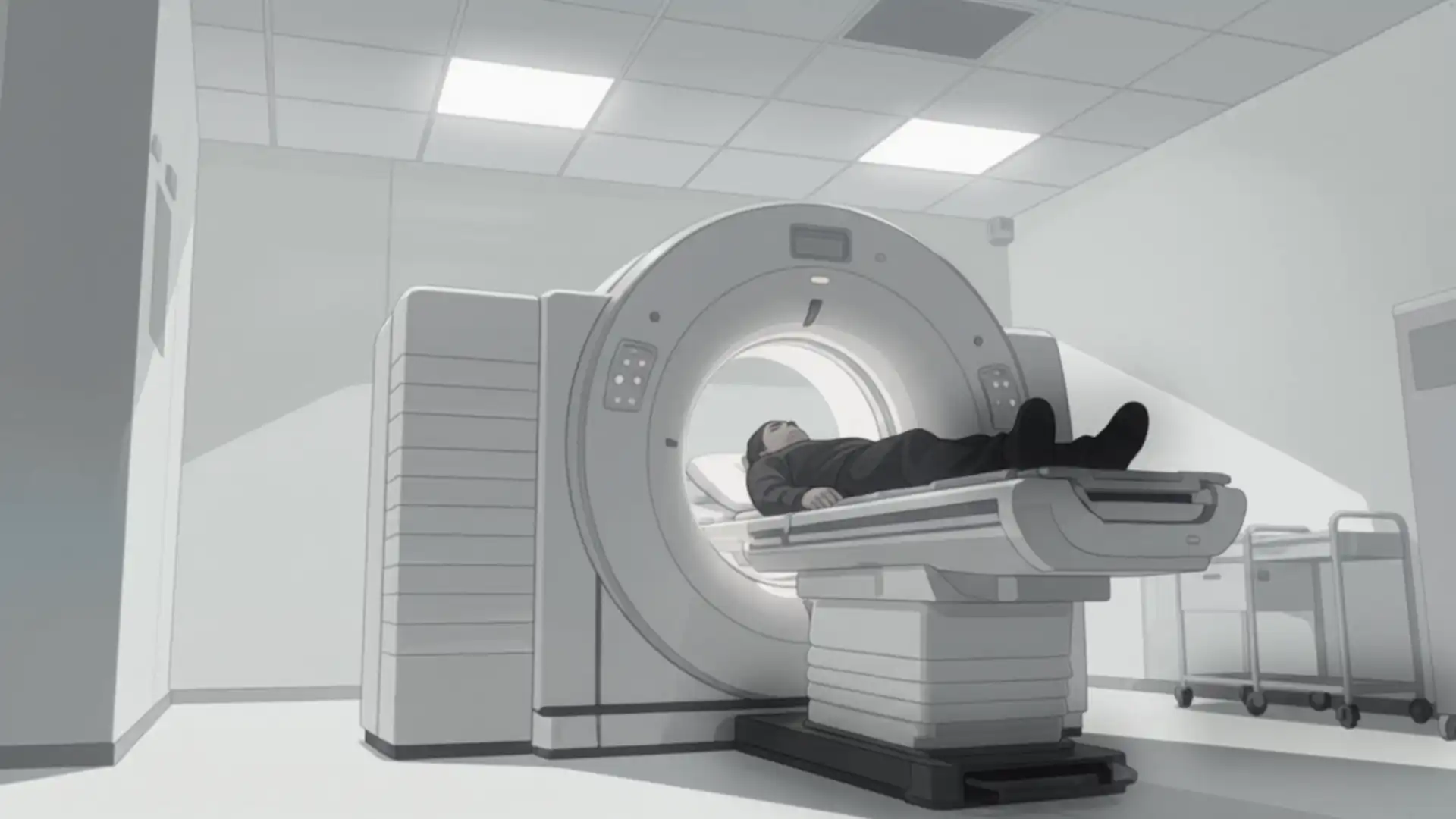
A 90-second animated explainer distilling the core science into something a non-specialist can follow and remember.
The Website
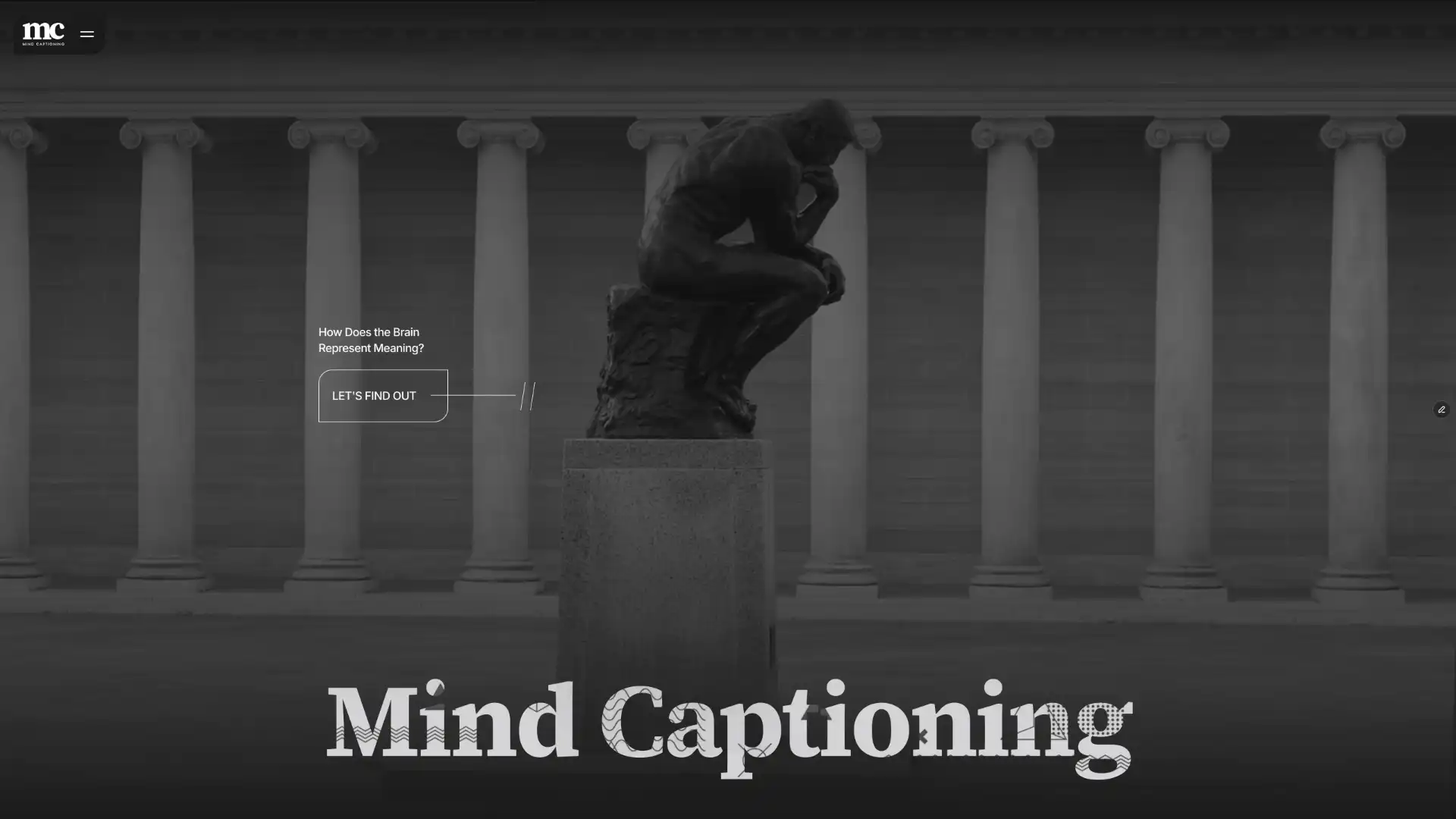
A dedicated research website giving the work a permanent, searchable public home with full narrative depth.
The Article
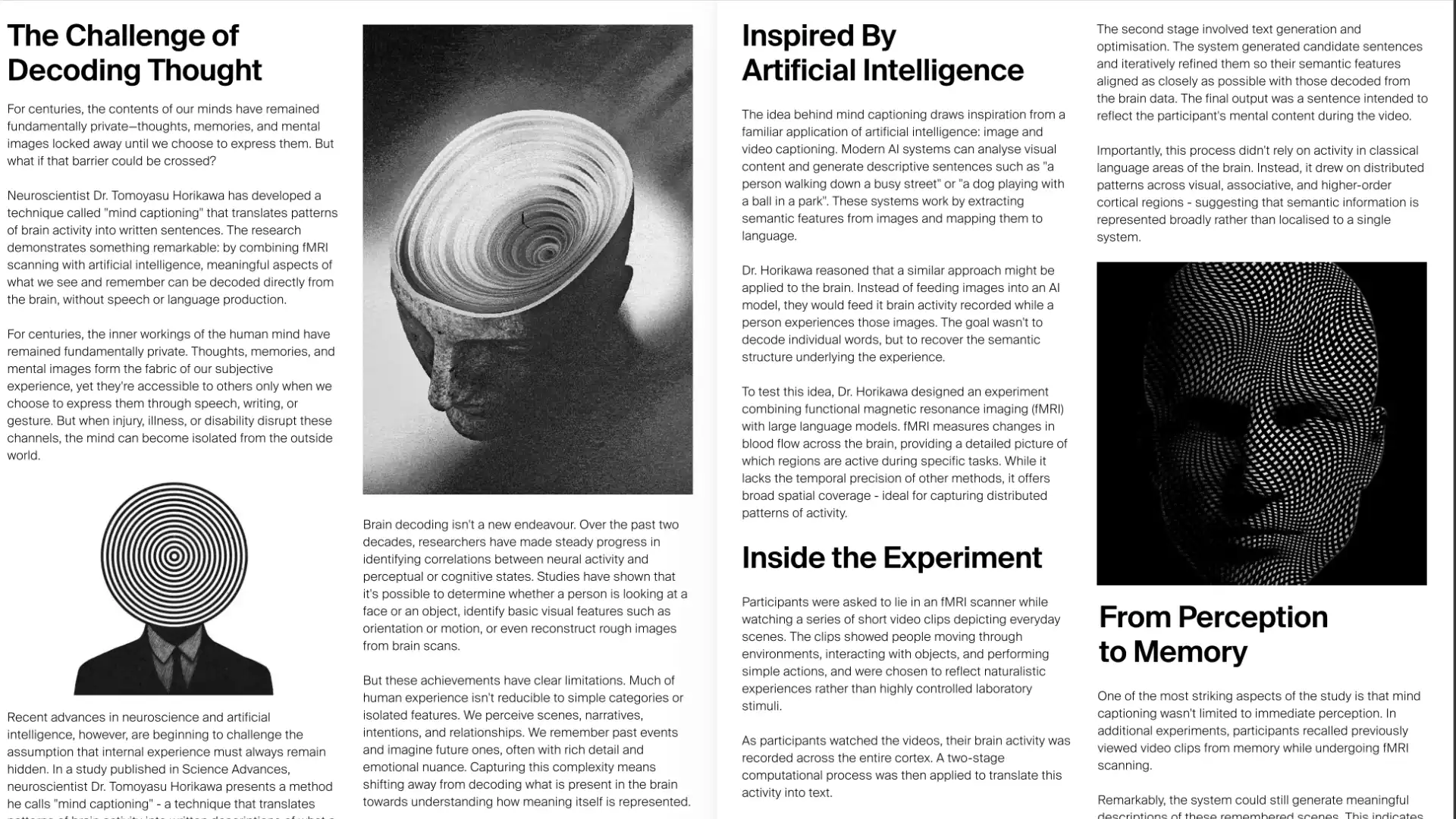
A plain-English written summary, formatted for sharing, designed to travel beyond academic networks.
The Process
How we worked
We started by reading the paper properly. Not skimming it. Reading it. Understanding what it actually showed, where the common misconceptions would arise, and what the non-specialist version of the story needed to be. For Mind Captioning, the biggest risk was that audiences would assume this was about reading minds. It is not. Getting that framing right was the first job.
From there we handled scripting, animation, web design, and article writing entirely in-house. Dr Horikawa's time commitment was concentrated at the briefing stage and a single review round. The production process did not require sustained involvement from him.
Once the assets were live we ran paid targeted promotion across all five major social platforms. We set the targeting, managed the spend, and kept promoting until we hit our guaranteed minimum reach. The 240,000 impressions represent organic and paid reach combined.
End Products
The Deliverables in Detail
The Film
The animation was built around one guiding principle: don't let the visuals outrun the science. Mind captioning is a subtle, technical piece of research, and the biggest risk was that audiences would default to "mind reading" as a frame. So, the style was kept clean and illustrative, paced to give each concept room to land before the next one arrived.
There's no dramatic re-enactment of the fMRI process, no sci-fi imagery. The film walks through how brain activity is decoded into text descriptions, step by step, and trusts the audience to find that remarkable on its own terms. Ninety seconds, no filler.
The Website
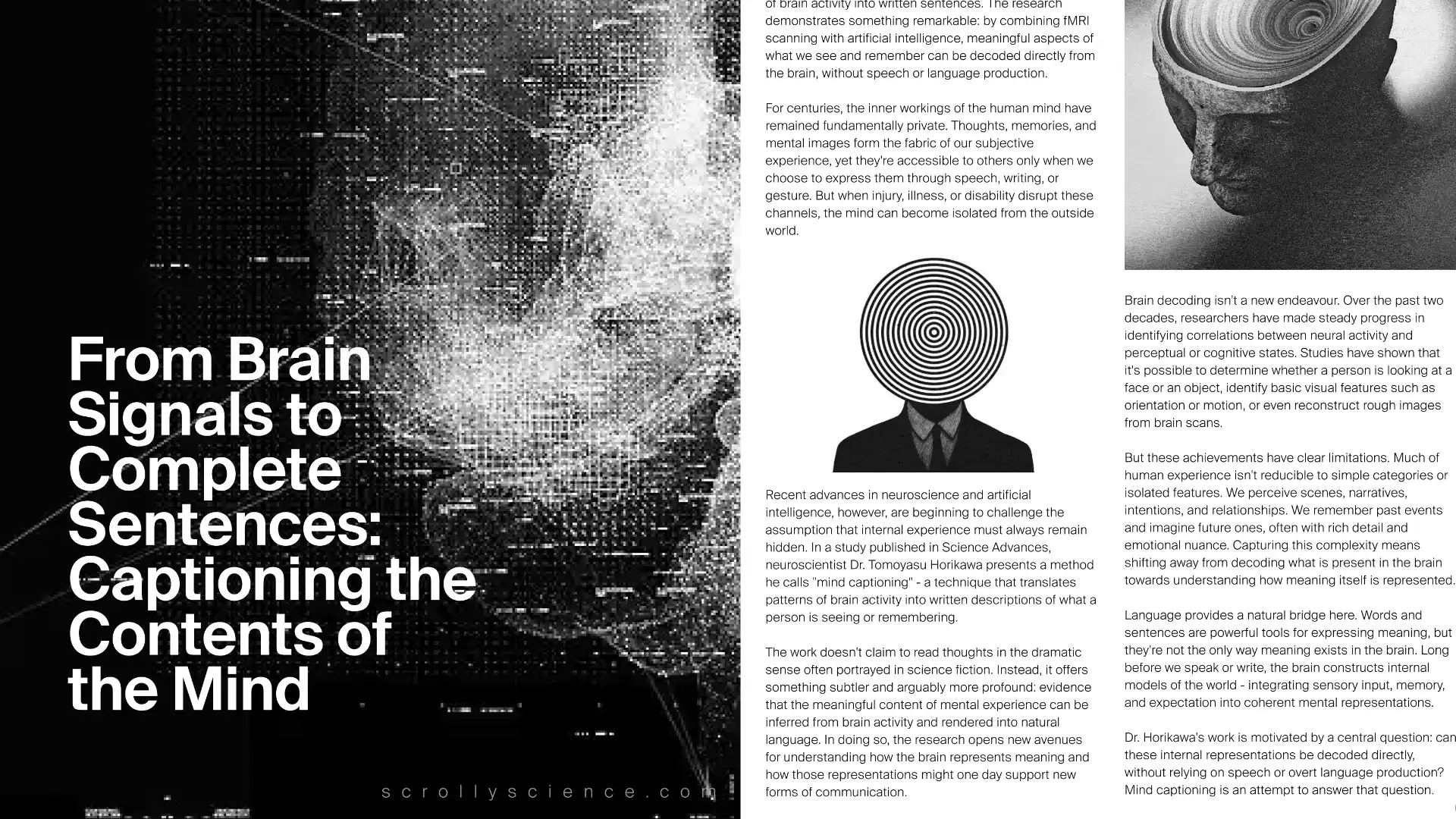
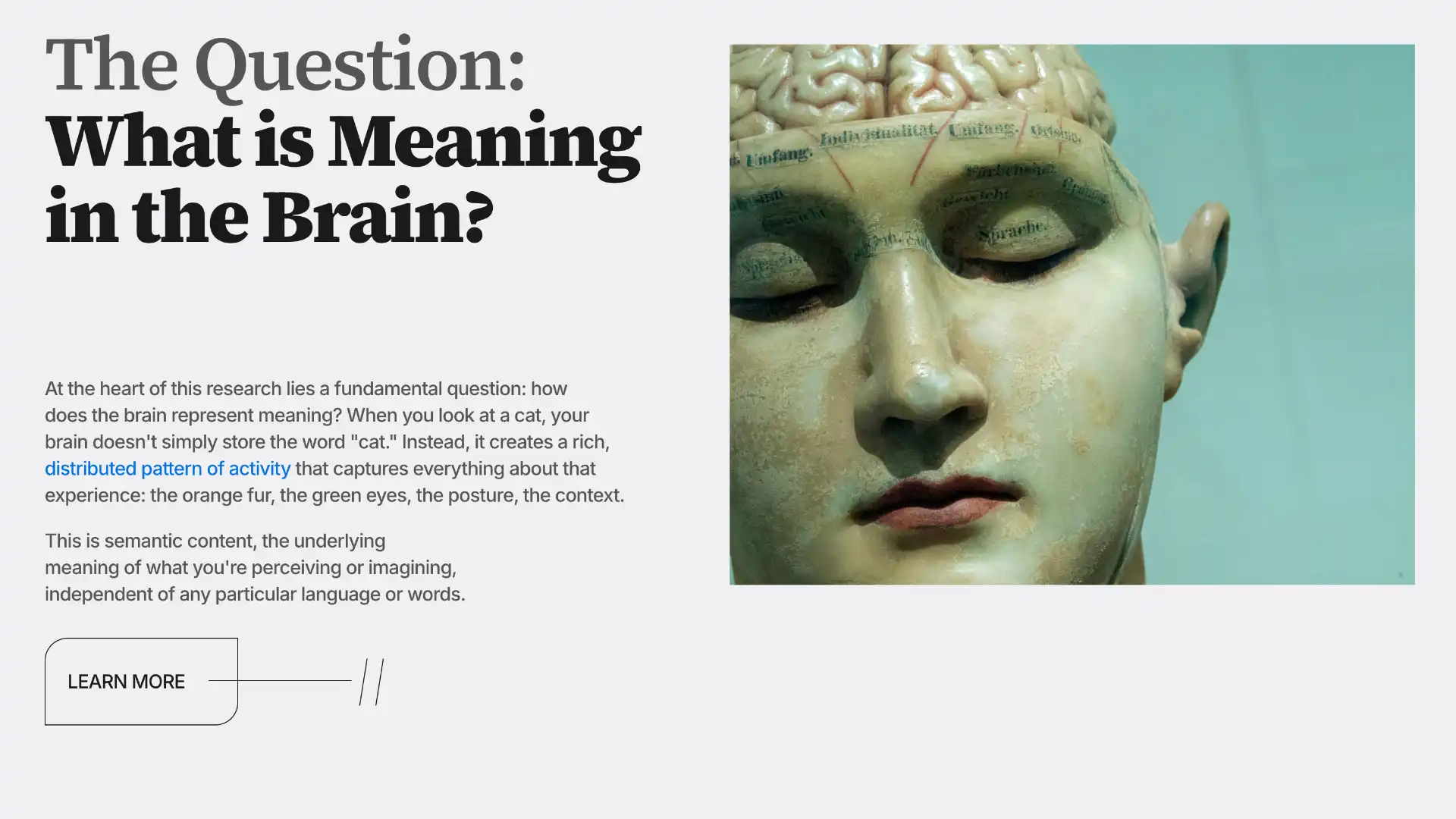
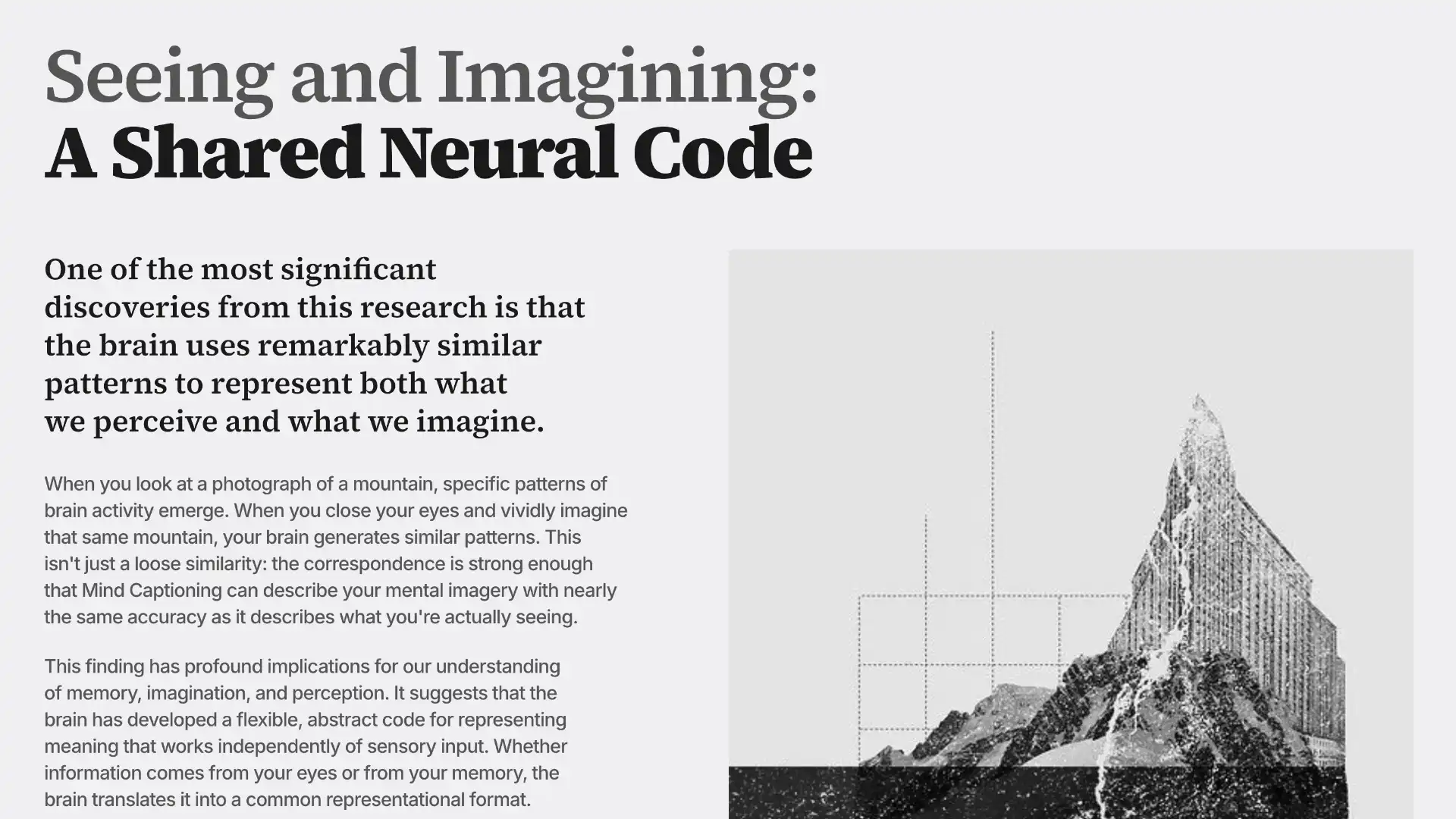
The site achieves what few research pages attempt: it makes neuroscience feel intimate. A dark, immersive palette grounds dense subject matter without heaviness, while generous whitespace and a disciplined typographic hierarchy give each section room to breathe and land. Imagery is cinematic rather than decorative, blending fMRI visualisations with atmospheric photography in a way that feels editorial, not academic.
Scroll-driven video and subtle motion bring the research to life without competing with the writing. The layout unfolds as a single, confident narrative rather than a collection of sections, drawing the reader deeper through rhythm and pacing. Typography is clean and modern, scaled with precision across breakpoints, letting the science speak while the design quietly elevates it. This is what happens when a complex research subject is treated with the same visual rigour as the science itself.
The Article
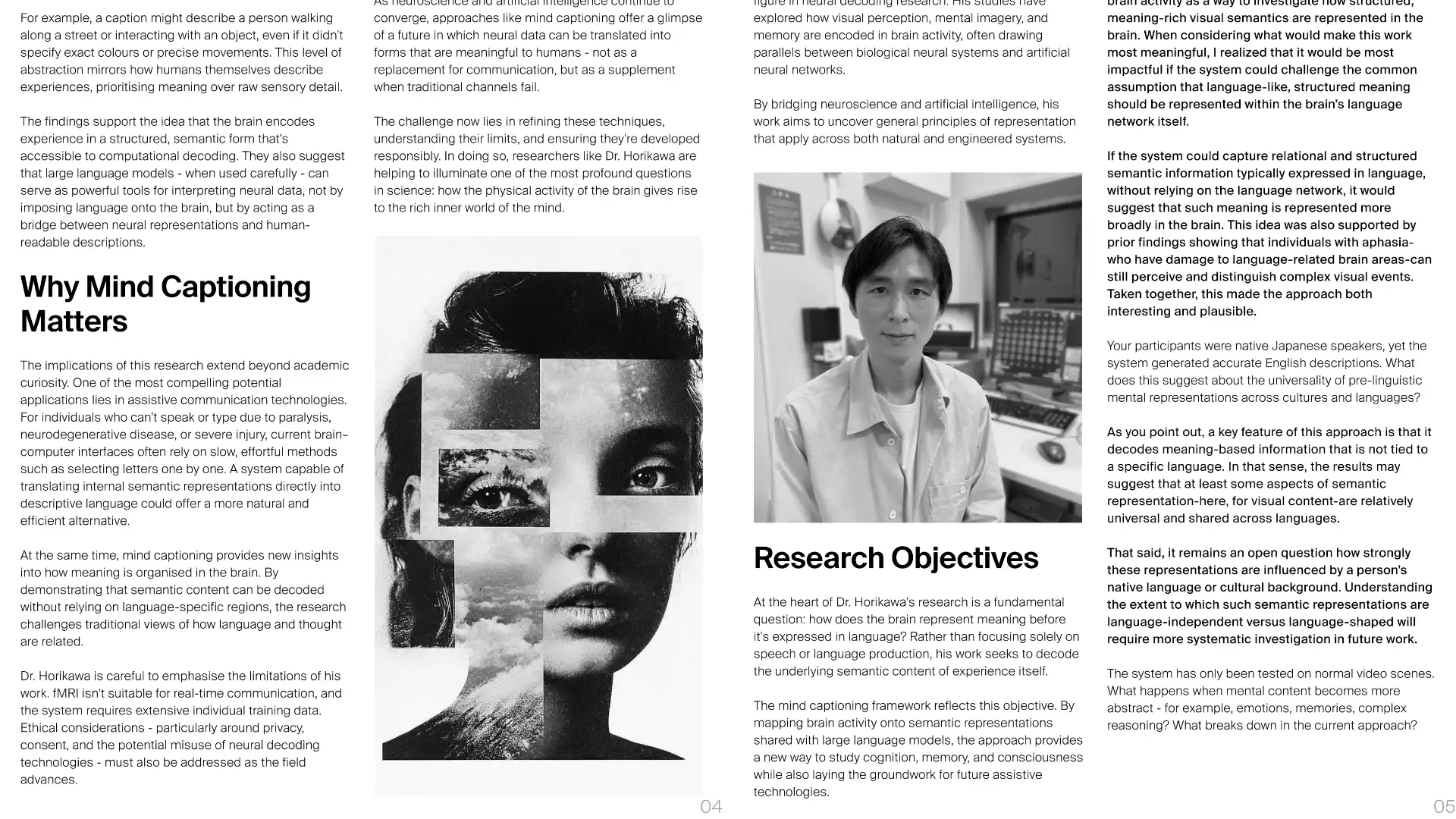
The written summary was structured to travel, not to be read cover to cover like a journal paper. It opens with the core idea in plain language, then builds outward through the method, the results, and the implications, following the questions a curious non-specialist would naturally ask rather than the structure of the original publication. The piece front-loads the core idea so that a reader who only gets through the first page still walks away with an accurate, if simplified, understanding of what the research showed and why it matters.
The detail builds from there for anyone who stays with it. The piece closes with Dr. Horikawa's own words, drawn from an interview, which grounds the whole thing in his perspective rather than ours. It was written to be something a journalist, funder, or fellow researcher from a different field could pick up and immediately use.