The Pandemic's Hidden Legacy
Long COVID
Long COVID
Long COVID
The pandemic ended. For millions of people, the story didn't. More than 400 million worldwide have experienced Long COVID. This is what we know.
The Story of COVID-19
The Story of COVID-19



In late 2019, doctors in Wuhan began noticing something unusual. Patients arrived with a mysterious pneumonia that didn't respond to the usual treatments. Within weeks, scientists identified the cause: a new coronavirus, later named SARS-CoV-2. What started as a local outbreak quickly became a global crisis. By March 2020, the World Health Organization declared COVID-19 a pandemic. The toll was enormous. But amid the devastation, science moved at a pace never seen before. Vaccines were developed and rolled out within a single year. By early 2021, doses were reaching arms around the world. In May 2023, the WHO declared the global health emergency over.
For many, the pandemic became a memory.
But for millions of others, the story didn't end there.
7M+
Confirmed
deaths worldwide
<1 yr
Vaccines developed
and deployed
2023
WHO declared the
emergency over
In late 2019, doctors in Wuhan began noticing something unusual. Patients arrived with a mysterious pneumonia that didn't respond to the usual treatments. Within weeks, scientists identified the cause: a new coronavirus, later named SARS-CoV-2. What started as a local outbreak quickly became a global crisis. By March 2020, the World Health Organization declared COVID-19 a pandemic. The toll was enormous. But amid the devastation, science moved at a pace never seen before. Vaccines were developed and rolled out within a single year. By early 2021, doses were reaching arms around the world. In May 2023, the WHO declared the global health emergency over.
For many, the pandemic became a memory.
But for millions of others, the story didn't end there.
7M+
Confirmed
deaths worldwide
<1 yr
Vaccines developed
and deployed
2023
WHO declared the
emergency over
In late 2019, doctors in Wuhan began noticing something unusual. Patients arrived with a mysterious pneumonia that didn't respond to the usual treatments. Within weeks, scientists identified the cause: a new coronavirus, later named SARS-CoV-2. What started as a local outbreak quickly became a global crisis. By March 2020, the World Health Organization declared COVID-19 a pandemic. The toll was enormous. But amid the devastation, science moved at a pace never seen before. Vaccines were developed and rolled out within a single year. By early 2021, doses were reaching arms around the world. In May 2023, the WHO declared the global health emergency over.
For many, the pandemic became a memory.
But for millions of others, the story didn't end there.
7M+
Confirmed
deaths worldwide
<1 yr
Vaccines developed
and deployed
2023
WHO declared the
emergency over
What Is Long COVID?

Long COVID describes a range of health problems that continue or develop after recovery from a COVID-19 infection. The World Health Organization defines it as symptoms that begin within three months of infection and last for at least two months. More than 200 different symptoms have been linked to Long COVID, affecting nearly every system in the body. Anyone can develop it, regardless of how mild or severe their initial infection was.
It is, in many ways, the hidden legacy of the pandemic.
200+
Symptoms linked to the condition
400M+
People affected worldwide since the pandemic began
6-7%
Of adults still living with the condition
All ages
Affects everyone, including children
What Is Long COVID?
Long COVID describes a range of health problems that continue or develop after recovery from a COVID-19 infection. The World Health Organization defines it as symptoms that begin within three months of infection and last for at least two months. More than 200 different symptoms have been linked to Long COVID, affecting nearly every system in the body. Anyone can develop it, regardless of how mild or severe their initial infection was.
It is, in many ways, the hidden legacy of the pandemic.
200+
Symptoms linked to the condition
400M+
People affected worldwide since the pandemic began
6-7%
Of adults still living with the condition
All ages
Affects everyone, including children
What Is Long COVID?
Long COVID describes a range of health problems that continue or develop after recovery from a COVID-19 infection. The World Health Organization defines it as symptoms that begin within three months of infection and last for at least two months. More than 200 different symptoms have been linked to Long COVID, affecting nearly every system in the body. Anyone can develop it, regardless of how mild or severe their initial infection was.
It is, in many ways, the hidden legacy of the pandemic.
200+
Symptoms linked to the condition
400M+
People affected worldwide since the pandemic began
6-7%
Of adults still living with the condition
All ages
Affects everyone, including children
Living with
Long COVID
For the people living with it, Long COVID can be exhausting in every sense of the word. Everyday tasks that once felt effortless can become genuinely difficult. Many describe the feeling as hitting a wall that comes without warning.
Fatigue
Deep, persistent exhaustion that does not improve with rest.
Brain Fog
Difficulty concentrating, finding words, and problems with memory.
Breathlessness
Winded after climbing stairs or during a short walk.
Heart Issues
Palpitations, dizziness, chest pain, and irregular rhythm.
Post-Exertional Malaise
Symptoms worsen after even modest physical or mental effort.
Digestive Issues
Gut disruption, nausea, and changes in appetite or digestion.
Pain
Joint and muscle pain, headaches, and nerve-related discomfort.
Mental Health
Anxiety, depression, and the toll of living with a misunderstood condition.
Living with
Long COVID
For the people living with it, Long COVID can be exhausting in every sense of the word. Everyday tasks that once felt effortless can become genuinely difficult. Many describe the feeling as hitting a wall that comes without warning.
Fatigue
Deep, persistent exhaustion that does not improve with rest.
Brain Fog
Difficulty concentrating, finding words, and problems with memory.
Breathlessness
Winded after climbing stairs or during a short walk.
Heart Issues
Palpitations, dizziness, chest pain, and irregular rhythm.
Post-Exertional Malaise
Symptoms worsen after even modest physical or mental effort.
Digestive Issues
Gut disruption, nausea, and changes in appetite or digestion.
Pain
Joint and muscle pain, headaches, and nerve-related discomfort.
Mental Health
Anxiety, depression, and the toll of living with a misunderstood condition.
Living with
Long COVID
For the people living with it, Long COVID can be exhausting in every sense of the word. Everyday tasks that once felt effortless can become genuinely difficult. Many describe the feeling as hitting a wall that comes without warning.
Fatigue
Deep, persistent exhaustion that does not improve with rest.
Brain Fog
Difficulty concentrating, finding words, and problems with memory.
Breathlessness
Winded after climbing stairs or during a short walk.
Heart Issues
Palpitations, dizziness, chest pain, and irregular rhythm.
Post-Exertional Malaise
Symptoms worsen after even modest physical or mental effort.
Digestive Issues
Gut disruption, nausea, and changes in appetite or digestion.
Pain
Joint and muscle pain, headaches, and nerve-related discomfort.
Mental Health
Anxiety, depression, and the toll of living with a misunderstood condition.


Looking Ahead
In just a few years, researchers have gone from barely understanding the condition to identifying its likely biological causes, launching large-scale clinical trials, and publishing results.
Patient advocates have pushed for greater recognition, more funding, and better access to care. There is growing recognition that Long COVID is real, that it matters, and that the people affected deserve support.
The story of Long COVID is still being written. But with continued research, compassion, and investment, there is genuine reason to hope.
Looking Ahead
In just a few years, researchers have gone from barely understanding the condition to identifying its likely biological causes, launching large-scale clinical trials, and publishing results.
Patient advocates have pushed for greater recognition, more funding, and better access to care. There is growing recognition that Long COVID is real, that it matters, and that the people affected deserve support.
The story of Long COVID is still being written. But with continued research, compassion, and investment, there is genuine reason to hope.
Looking Ahead
In just a few years, researchers have gone from barely understanding the condition to identifying its likely biological causes, launching large-scale clinical trials, and publishing results.
Patient advocates have pushed for greater recognition, more funding, and better access to care. There is growing recognition that Long COVID is real, that it matters, and that the people affected deserve support.
The story of Long COVID is still being written. But with continued research, compassion, and investment, there is genuine reason to hope.

The Science
The Search for Answers
The Search for Answers
The Search for Answers
What causes it?
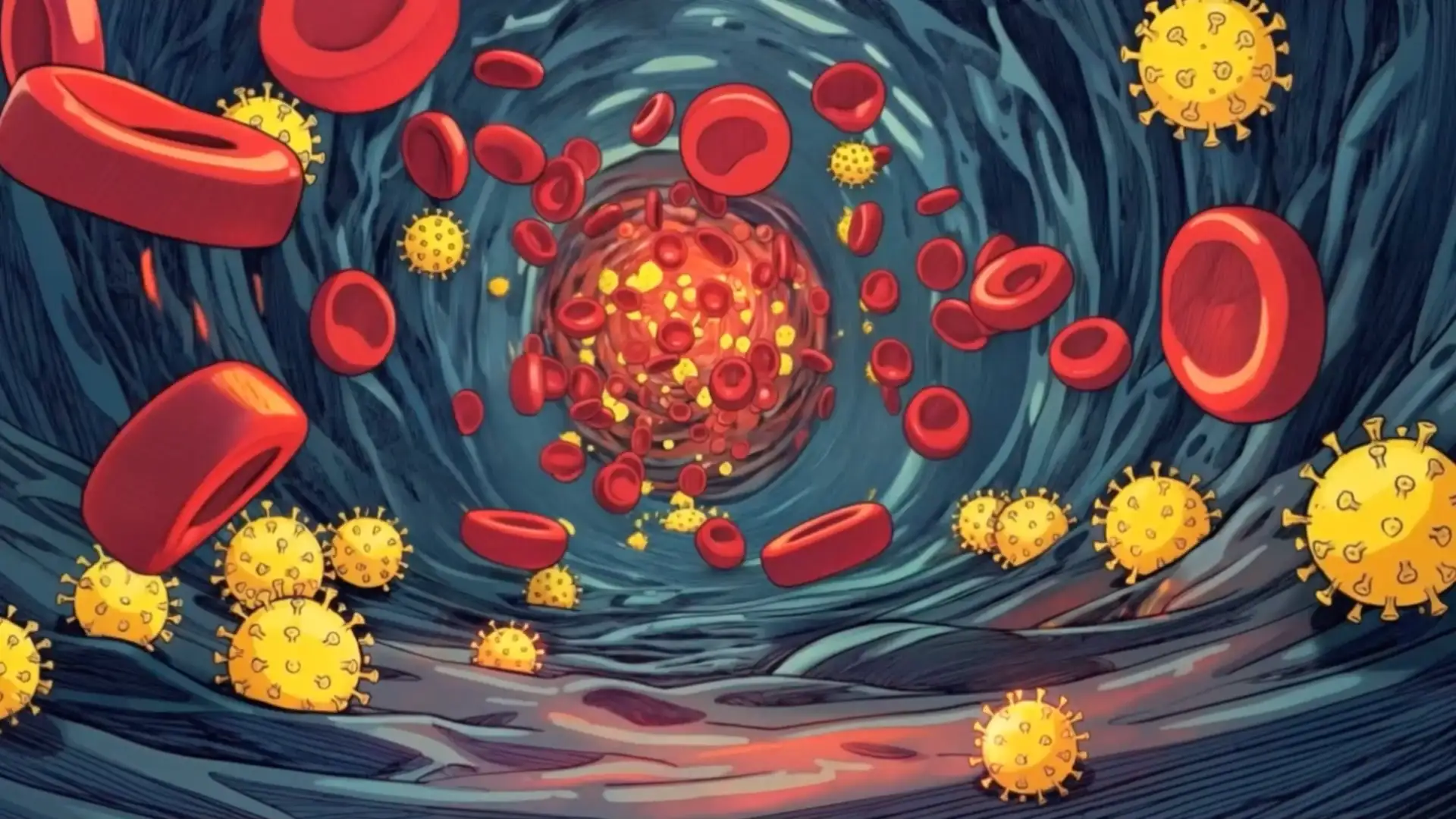
Researchers have identified several mechanisms that may be at work, sometimes simultaneously: viral fragments persisting in tissues, an immune system stuck in high alert, reactivation of dormant viruses like Epstein-Barr, tiny blood clots disrupting circulation, damage to blood vessels, and disruption of the gut microbiome.
What's being done?
The US RECOVER initiative has enrolled over 30,000 people in studies and clinical trials. By 2025, all eight initial trials had completed enrolment, testing 13 possible treatments. Approaches range from antiviral drugs and immune-calming medications to brain stimulation therapies and rehabilitation programmes. Vaccination has also been shown to lower the risk of developing Long COVID.

Sources & Accuracy
Researched and fact-checked using data from the World Health Organization, the US Centers for Disease Control and Prevention, the National Institutes of Health RECOVER initiative, peer-reviewed studies published in Nature, The Lancet, Cell, and other journals, and reporting from the American Medical Association, Mayo Clinic, Yale Medicine, and NPR. All statistics current as of March 2026.
Animation: Long COVID by Scrolly Science